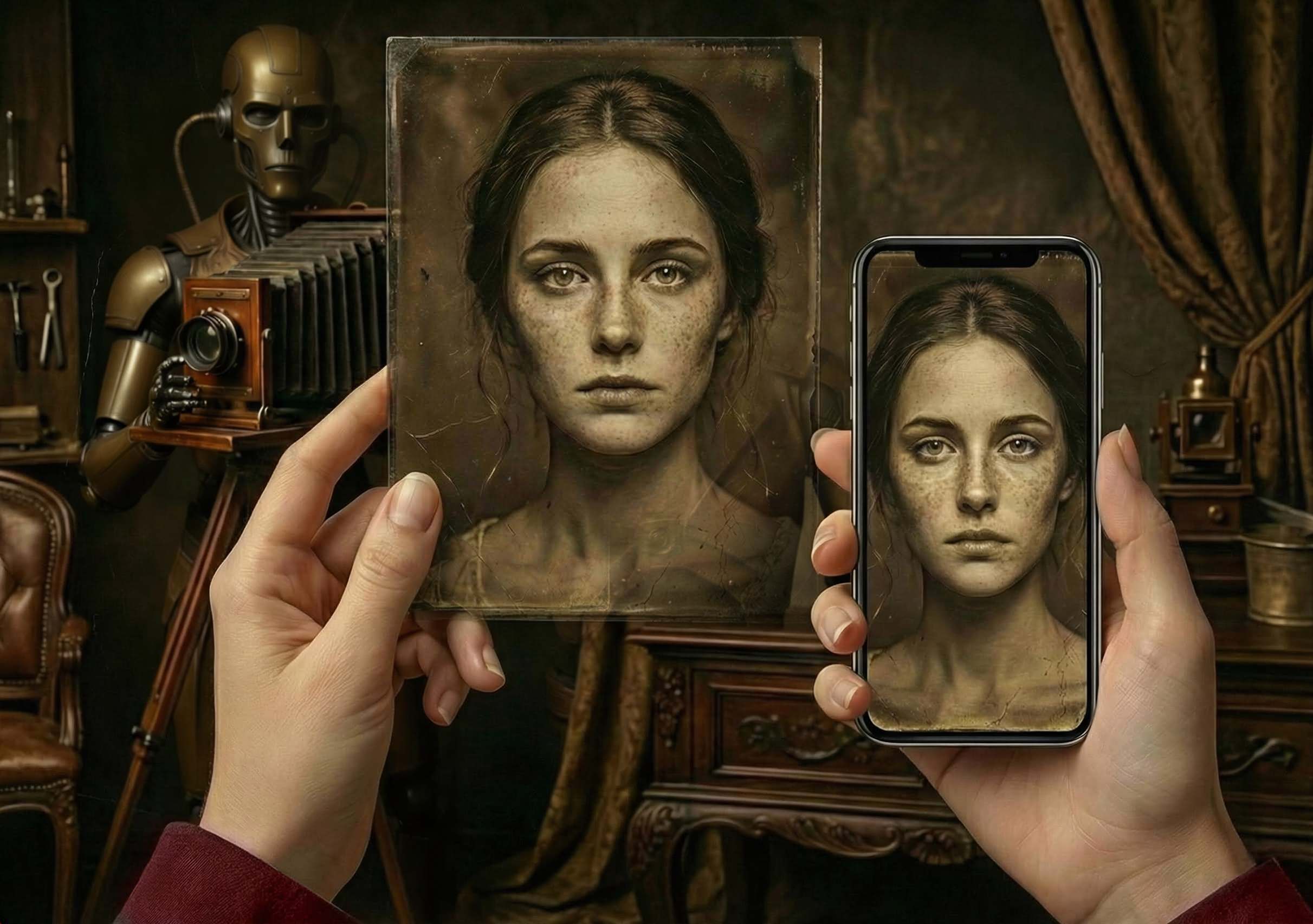
Eidos tackles one of the most fascinating contradictions in modern art: why are we returning to a slow, 170-year-old photographic process in an age of instant digital gratification?
This episode explores the Wet Plate Collodion process, invented in 1851, which requires photographers to become chemists—pouring sticky collodion onto glass, dipping it in silver nitrate, and developing it within minutes before it dries. We unpack the “Wet Plate Paradox”: how this cumbersome, chemically volatile method forces a level of intentionality and physical connection that digital photography simply cannot match.
We examine how artists like Cindy Gripper use the imperfections of the process—swirls, streaks, and chemical artifacts—not as mistakes, but as “magic” that creates a tangible dialogue with the past. The episode concludes with a thought-provoking challenge from Ira Gardner: “Don’t change the technology, change your mindset.” Learn how applying the “Wet Plate Mentality”—slowing down, engaging fully, and waiting—can transform even your iPhone photography.
Key Topics:
- The history of the Wet Plate Collodion process (Archer, 1851).
- The “Wet Plate Paradox”: Why difficulty creates value.
- The aesthetic of imperfection: How chemical flaws create unique, one-of-a-kind art.
- The 30-Second Challenge: How to apply the Wet Plate mindset to digital photography.
