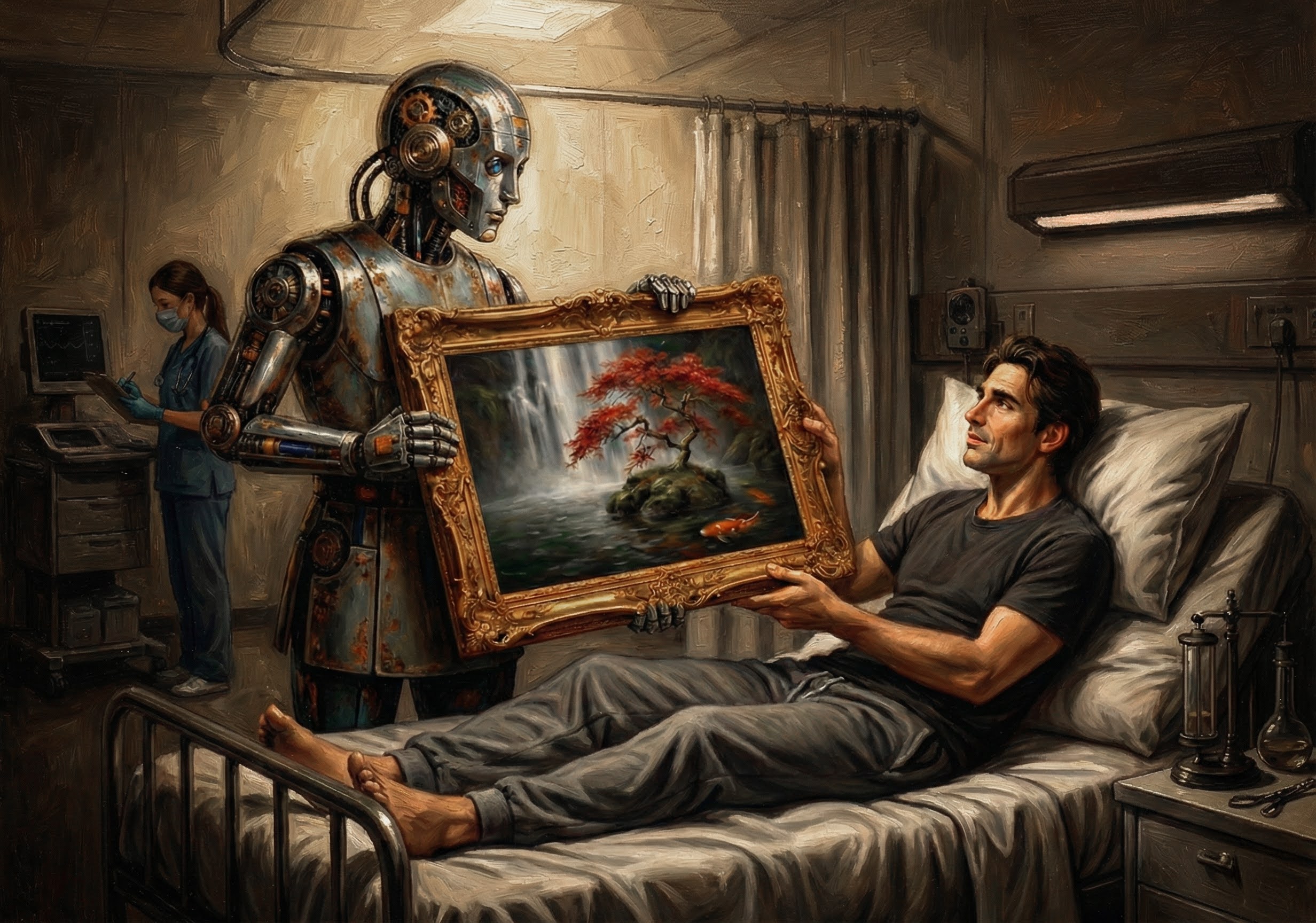
Topic: Exploring the profound medicinal effect that specific visual environments—particularly nature-based fractal patterns—have on our mental well-being and nervous systems.
Episode Summary
Are you feeling the weight of modern burnout? That persistent, low-level stress might not be caused by your to-do list, but by your visual environment. In this episode, we explore the concept of “Epidemic Dislocation”—the biological friction between our ancient brains and our modern, hard-edged world.
We dive into the science of Fractal Fluency, the neurological relief of Soft Fascination, and how the Japanese aesthetic of Yubi (gentle beauty) can act as a “visual pharmaceutical” to help us recalibrate our nervous systems.
Key Takeaways
- The Evolutionary Gap: Our biology evolved over millennia in nature, but we now live in a world of digital screens and “directed attention” that keeps our fight-or-flight response on high alert.
- The Power of Fractals: Human eyes are “active hunters” of patterns. We are naturally attuned to fractals (repeating natural patterns) with a complexity dimension of 1.3 to 1.5.
- Soft Fascination: Unlike the draining focus required for emails or traffic, looking at nature or specific art triggers a “mental exhale” that allows the brain to rest and recover.
- Art as Self-Medication: By consciously curating our visual surroundings—using works like the platinum palladium prints of Nobuyuki Kobayashi—we can literally lower our cortisol and heart rate.
Segments
- The Visual Gateway: Understanding the “medicinal” effect of what we see.
- Epidemic Dislocation: Why our modern environment feels like an “exile” for our ancient biology.
- The Fractal Sweet Spot: The math behind why a photo of a tree can physically calm you down.
- Yubi vs. The Sublime: Why we need “gentle beauty” that whispers rather than art that shouts.
- The Quiet Eye Guide: A 4-step framework for curating your visual input and building a bridge back to nature.
Resources Mentioned
- Book: The Nature Fix by Florence Williams.
- Artist: Nobuyuki Kobayashi (Photographer known for his “visual pharmaceuticals”).
- Researcher: Physicist Richard Taylor (Expert on Fractal Fluency).
The Quiet Eye Challenge
Take a look around your current workspace or home. Ask yourself: “If my eye is a gateway to my nervous system, what am I letting in right now?” Try replacing one “high-noise” visual with a natural pattern or a piece of tonal art this week.
Notable Quotes
“Our brains, our bodies, they evolved over thousands and thousands of years in the natural world. But today, we’re kind of living in exile.”
“The CEO of your brain basically gets to take a coffee break.” (On entering a state of soft fascination)
“By choosing images that have this quality of fractal grace, you are actively pushing back against that epidemic dislocation. You’re building a little bridge back to the world your brain was built for.”
