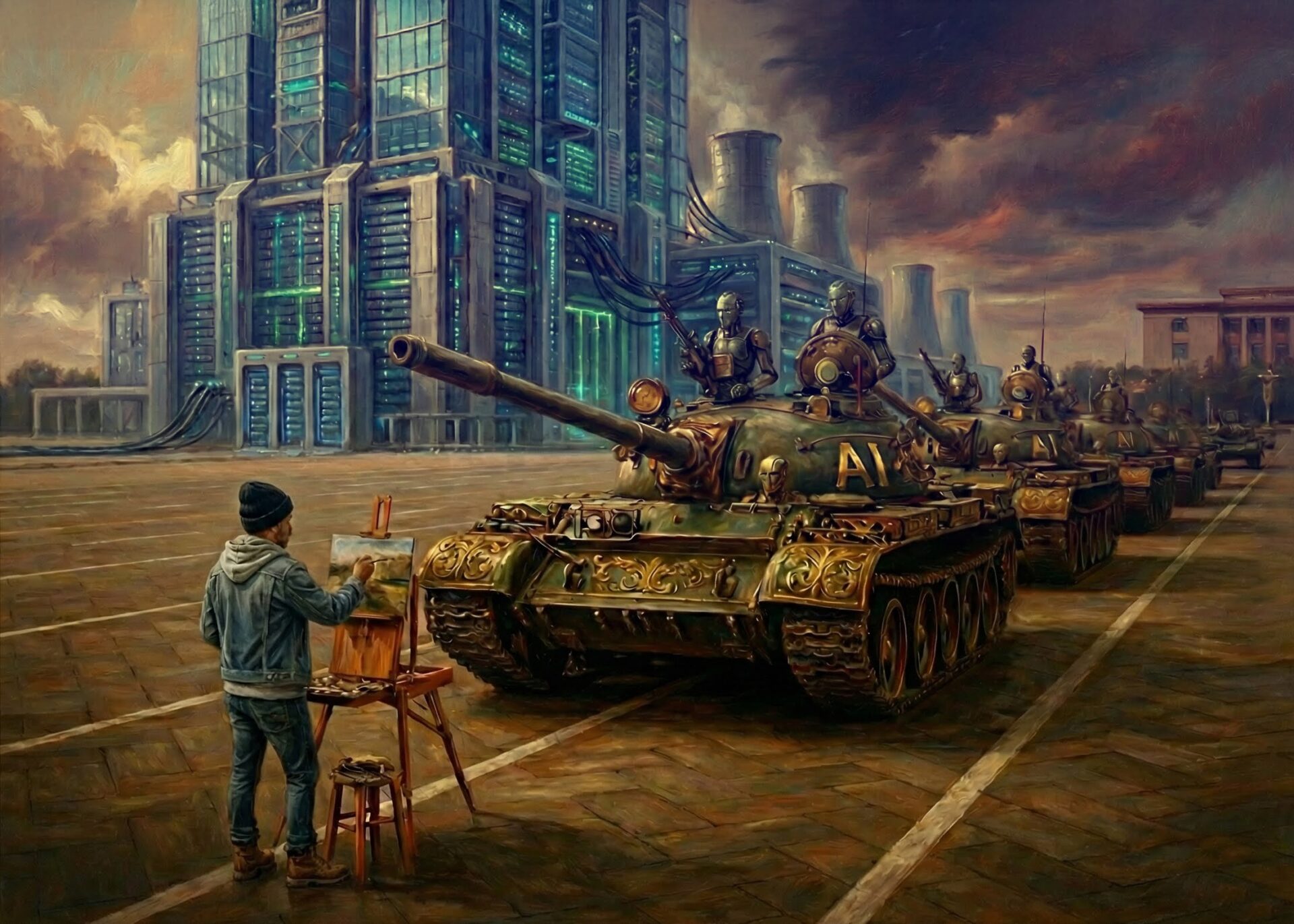
Core Theme: An exploration of the heated debate surrounding generative AI in art, contrasting the “Academic Skeptic” view of labor and ethics with the “Conceptual Visionary” view of intent and new mediums.
Episode Overview
This episode addresses the clash between two fundamental philosophies of art: the ancient concept of techné (craft and physical struggle) versus the power of the conceptual idea. Eidos editor Ira Gardner, a silver gelatin darkroom photographer, navigates his own paradox of using AI for podcast visuals while respecting a lifetime of traditional craft. We break the debate into three rounds: ethics, utility, and art history, while offering a framework for “ethical pragmatism” through a self-imposed code of conduct.
Round 1: The Ethics of “Digital Sharecropping”
The Academic Skeptic argues that AI models are built on “stolen scaffolding”.
- Uncompensated Labor: AI models are trained on billions of images scraped from the internet without the consent of or compensation for the original creators.
- Devaluing Craft: Skeptics believe that bypassing the physical struggle and technical mastery of a medium cheapens the final output.
- The Library vs. Scraper: Unlike a human researcher who processes one book at a time in a library that compensated the author, AI ingests the entire web’s visual output instantly at an industrial scale.
Round 2: The Conceptual Defense
The Conceptual Visionary argues that art has migrated from the hand to the mind’s eye.
- The Duchampian Precedent: Much like Marcel Duchamp’s “readymades,” the art lies in the act of selection and recontextualization rather than physical production.
- The Latent Space: Prototyping and prompting are seen as navigating a “multidimensional map of ideas,” where the artist is a curator of the infinite.
- Polaroid of the Mind: Invoking Walker Evans’ late-career use of the Polaroid, proponents see AI as a way to remove technical barriers and allow the “eye” to work faster in a “frenzy of personal compulsion”.
Round 3: Resistance vs. Restraint
Using the metaphor of “Tank Man” in Tiananmen Square, the episode explores how individuals can respond to an asymmetric power balance.
- The Ethical Purist (Resistance): A heroic, symbolic refusal to use the tool as a protest against the devaluation of human work.
- The Pragmatic User (Restraint): Acknowledging that the “tanks are already in the square,” this view argues that engagement is the only way to set precedents and demand guardrails.
- The Way of Wu Wei: Adopting the Taoist concept of “effortless action,” creators can use AI to guide ideation and structure research while keeping the “mind’s eye” in charge of the final human creation.
The Eidos Code: A Framework for Ethical Use
To move forward without making a “huge ethical compromise,” the episode proposes the Eidos Code—a self-imposed, transparent framework of creative restraints:
- Non-Prose Use: AI might be used for research or outlines, but never for final prose.
- Transparent Labeling: Clearly stating the percentage of AI generation in any final product.
- Avoiding the “Second Arrow”: Based on Buddhist philosophy, this means accepting the reality of AI’s presence (the first arrow) to avoid the self-inflicted suffering of constant, futile resentment (the second arrow).
Notable Quotes
“The image is a digital successor to the readymade. The craft is no longer in the darkroom; it’s in mastering the syntax of the prompt.”
“Pure resistance is an exercise in purity that gives you no actual control over the future. Abstinence grants power to others.”
“The academic serves as the critical conscience… and the conceptualist is the pioneer. The tension between them is what drives art forward.”
