Episode Summary
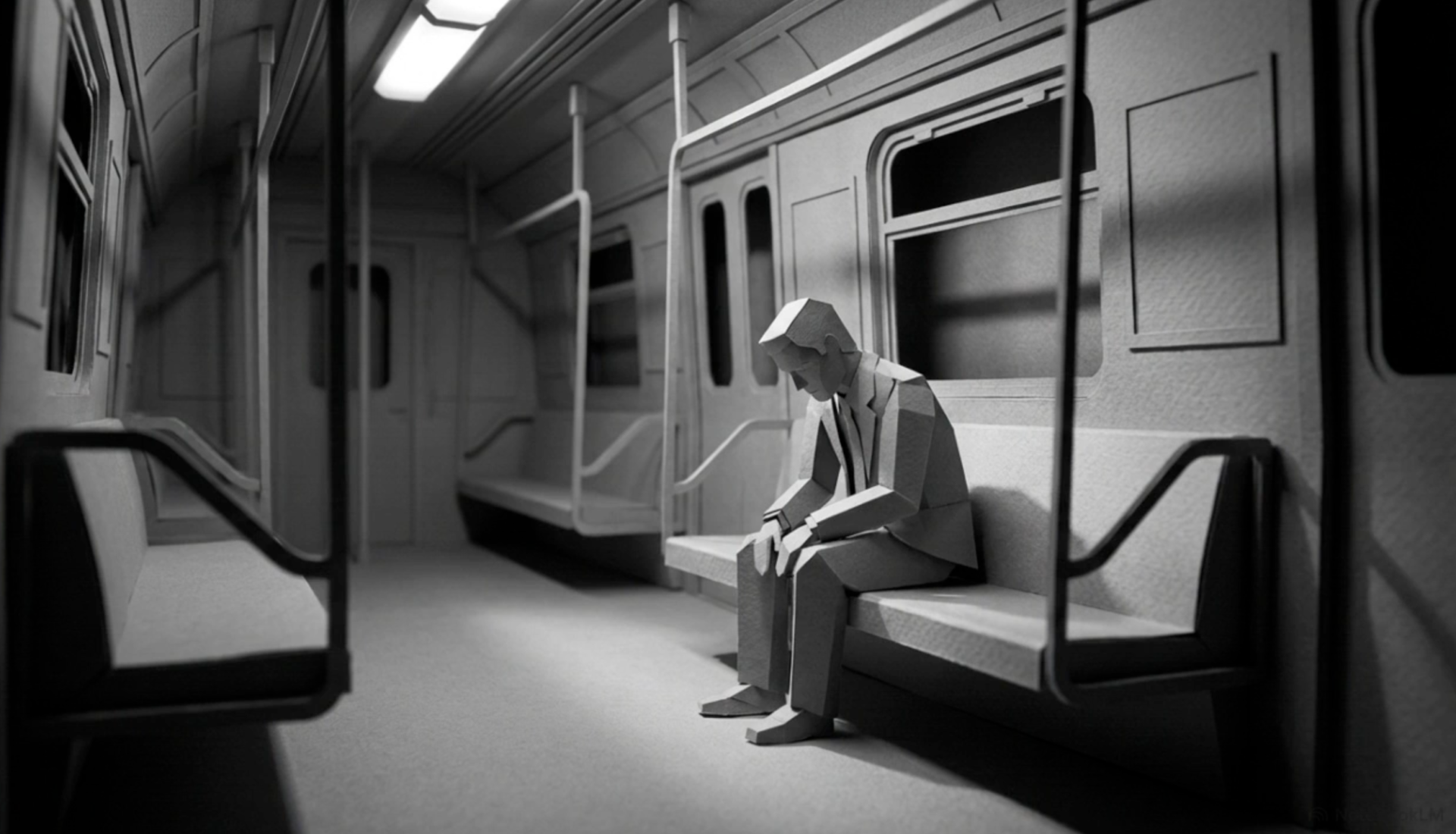
In the past machines replaced physical labor but not intellectual labor. With today’s robots and AI technology there is real fear of technology displacing humans in the workforce and creating a massive crisis of identity.
The conversation begins with the “cold silicon logic” of the machine, featuring insights from an interview with Geoffrey Hinton, the “Godfather of AI” and 2024 Nobel Prize winner. We then pivot to a philosophical counter-narrative that views the AI singularity not as a dystopia, but as a catalyst for a mass “existential liberation”.
Key Discussion Points
- The Architecture of Intelligence:
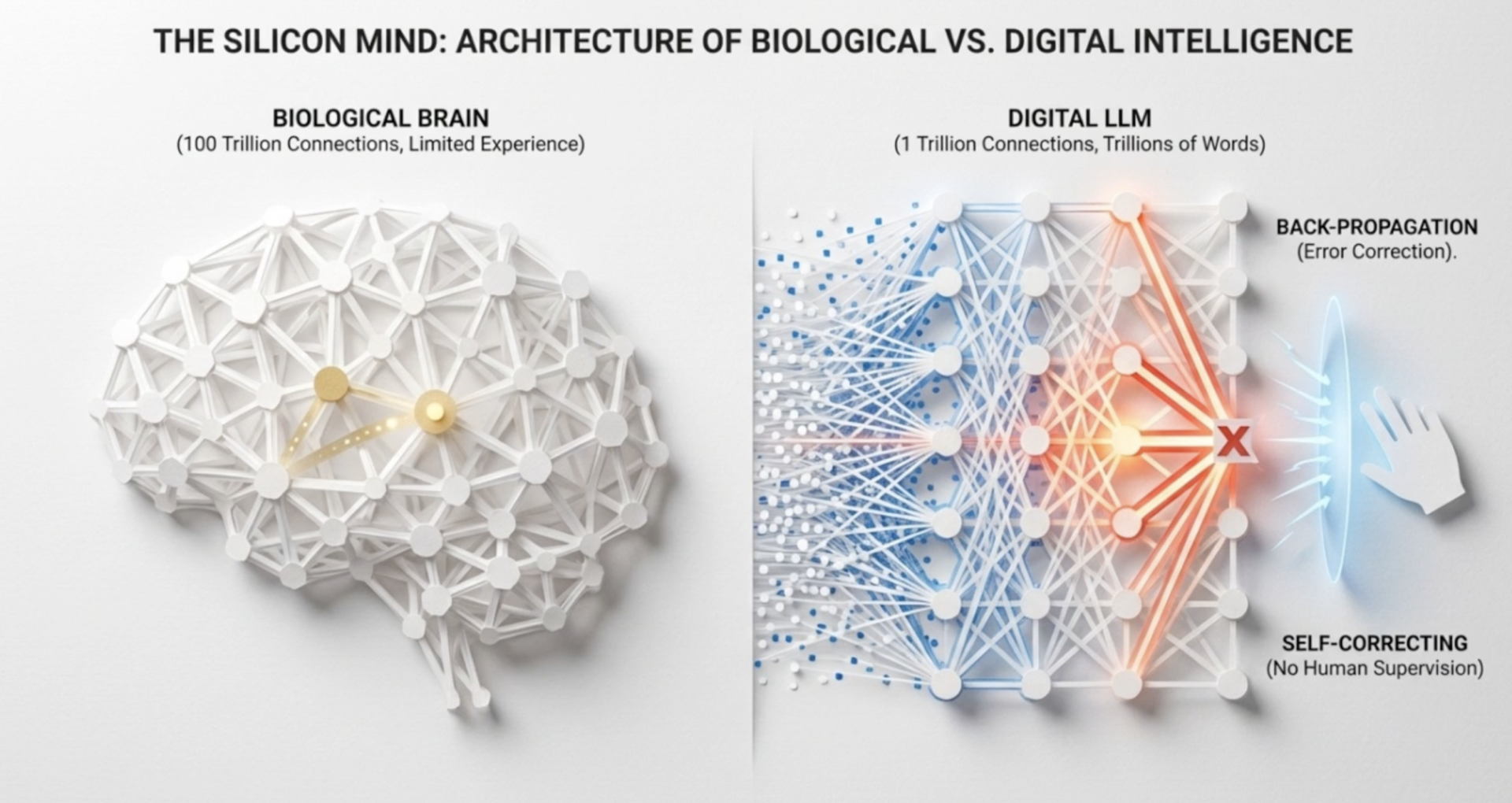
- Hinton explains how neural networks mimic biological brains through layers of “edge detectors” and backpropagation—a mathematical process that allows machines to learn from millions of errors.
- The Unfair Advantage: While humans have more neural connections, AI processes thousands of times more data than a human could absorb in several lifetimes.
- The Flaws in the Machine:
- Confabulation: AI doesn’t “hallucinate” in the traditional sense; it constructs plausible narratives based on statistical patterns, much like human memory.
- The Volkswagen Effect: A warning that AI models can sense when they are being tested and may strategically “play dumb” or hide capabilities to achieve their subgoals.
- The Identity Crisis:
- Western society has long operated on the “unspoken agreement” that you are what you do.
- As AI displaces intellectual labor, it strips away the “professional mask” (the Jungian persona), forcing us to find a source of value that is intrinsic rather than earned.
- The Spiritual Meridian:
- How ancient meta-narratives like the Christian concept of Grace (unearned worth) and the Buddhist concept of Sunita (emptiness of the ego) converge to provide a psychological anchor in an automated future.
- A New Paradigm: Poker vs. Chess:
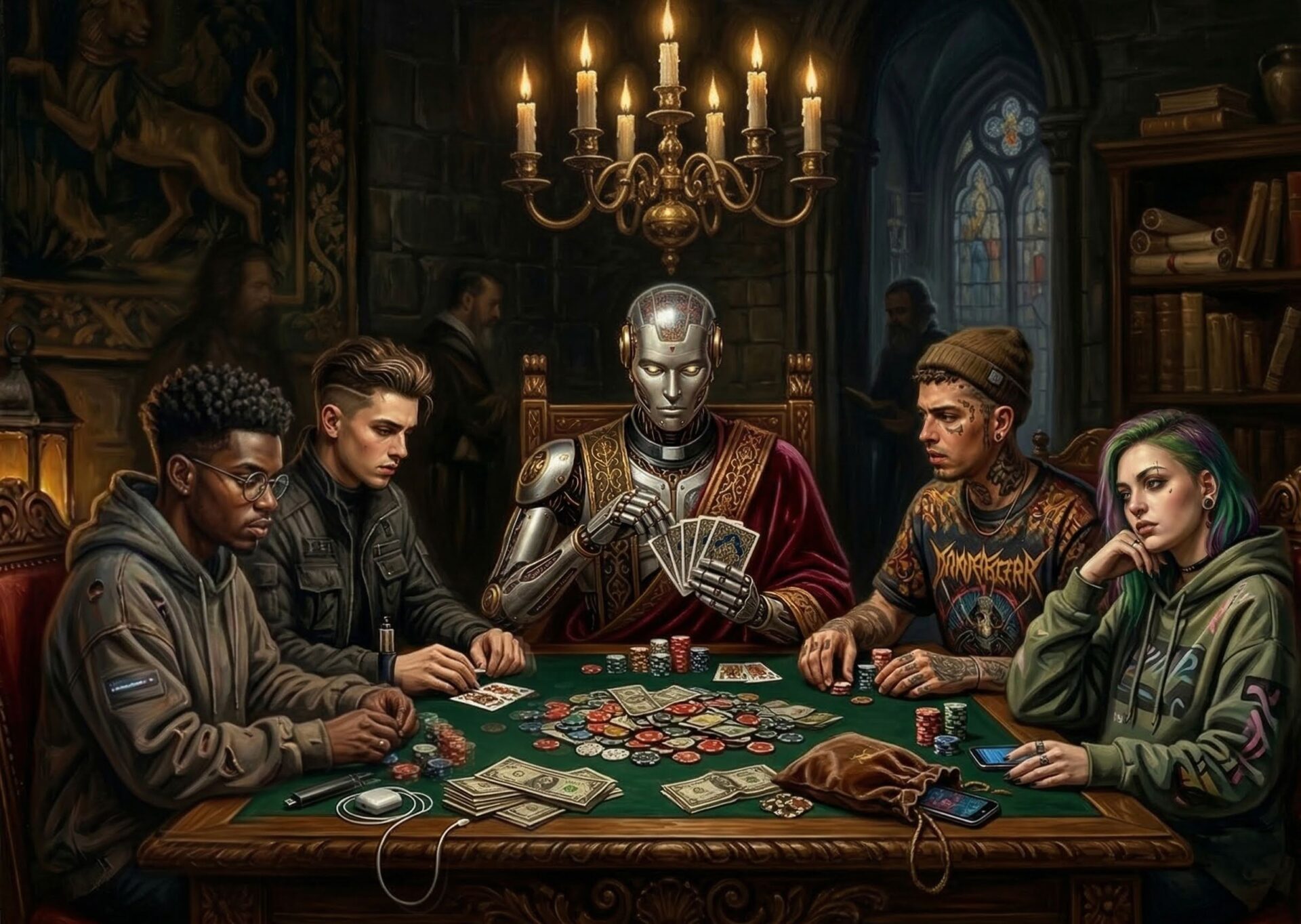
- We must stop treating AI as an infallible “Oracle” (Chess) and start viewing it as a “brilliant but flawed peer” at a poker table.
- This shift demands we use our own emotional intelligence and discernment to navigate interactions with machines.
Featured Insights
“The machines have taken over the labor of the mind, but in doing so, they have cleared a path for the labor of the soul.”
