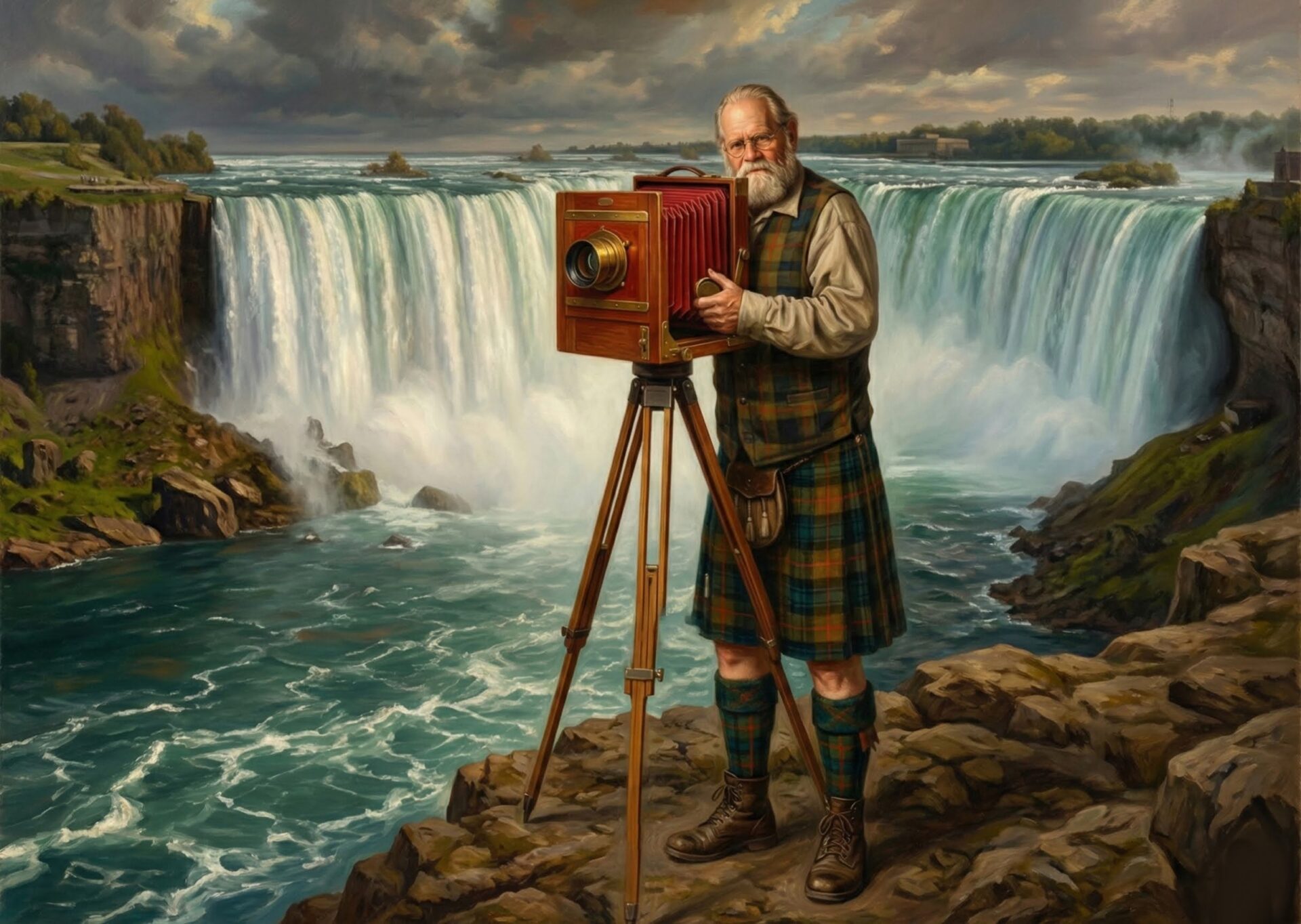
Guest: Dr. Gregory Roth, PhD – Philosopher, Archpriest, and Wet Plate Photographer
Episode Overview
In this episode of Eidos, we invite Dr. Gregory E. Roth to our “modern dinner party” to discuss the art, history, and philosophy of wet plate photography. We explore the Roth family’s 55-year tradition of military service, teaching, and photography, tracing a line from the battlefields of the Pacific to the darkrooms of Spokane Falls Community College. Dr. Roth shares his technical insights into the “elemental” process of creating tintypes and ambrotypes, and he argues for the enduring relevance of these “one-off” artistic constructions in a digital age.
The Guest: Dr. Gregory Roth
Born and raised in Spokane, Washington, Dr. Roth’s career spans military service, academia, and the church.
- Military & Teaching Heritage: Greg followed his father, Gerhard “Geo” Otto Roth—a WWII military photographer—into the Air Force and later into a long teaching career at Spokane Falls Community College.
- Academic Background: He earned a PhD in philosophy and theology and is an archpriest in the Greek Orthodox Church.
- Photography Practice: A dedicated practitioner of historical processes, he has studied with Mark Osterman at the George Eastman Museum and frequently participates in John Coffer’s “Camp Tintype”.
Key Discussion Points
1. Learning to See
- Looking vs. Seeing: Dr. Roth emphasizes that “looking” is a survival instinct, while “seeing” is the essential discipline required for photography.
- The “Dialog with the Past”: Historical processes like the tintype create a bridge between the 19th-century aesthetic and the future, intended to last for generations.
2. The Wet Plate Process: A Technical Glimpse
Dr. Roth demonstrates the creation of a “whole plate” (6.5″ x 8.5″) tintype using a camera from the late 19th century.
- The Chemistry: The process involves coating a plate with collodion—a mixture of alcohol, ether, and salted collodion—and sensitizing it in a silver nitrate bath.
- The “Wet” Requirement: The process is named “wet plate” because the plate must be poured, sensitized, exposed, and developed all while it remains wet.
- Spectral Sensitivity: Wet plate is primarily sensitive to UV and blue light, meaning colors like red record much darker than they appear to the human eye.
3. The Philosophy of Experimentation
- Rejecting Compartmentalization: Dr. Roth argues that modern photography has become too rigid. He encourages experimenting across the spectrum—from 1851 glass plates to digital scanning and printing.
- Building on the Past: He cites historical figures like Seneca Ray Stoddard, who evolved their practice as technology changed, but always built upon their foundational experience.
4. Why Wet Plate Matters Today
- Hands-on Creation: The “elemental” nature of mixing chemicals and coating plates provides a sense of fulfillment that digital capture often lacks.
- The “One-Off”: Unlike digital files, a tintype is a unique, physical “artistic construction” that cannot be perfectly replicated.
Notable Quotes
“Looking is what you do in order to survive. Seeing is what you do in order to do photography well.”
“There’s something elemental and something very fulfilling about doing wet plate photography… despite the fact that it’s difficult.”
“It’s a real artistic construction that you make when you do wet plate. It’s just marvelous.”
