Episode Overview
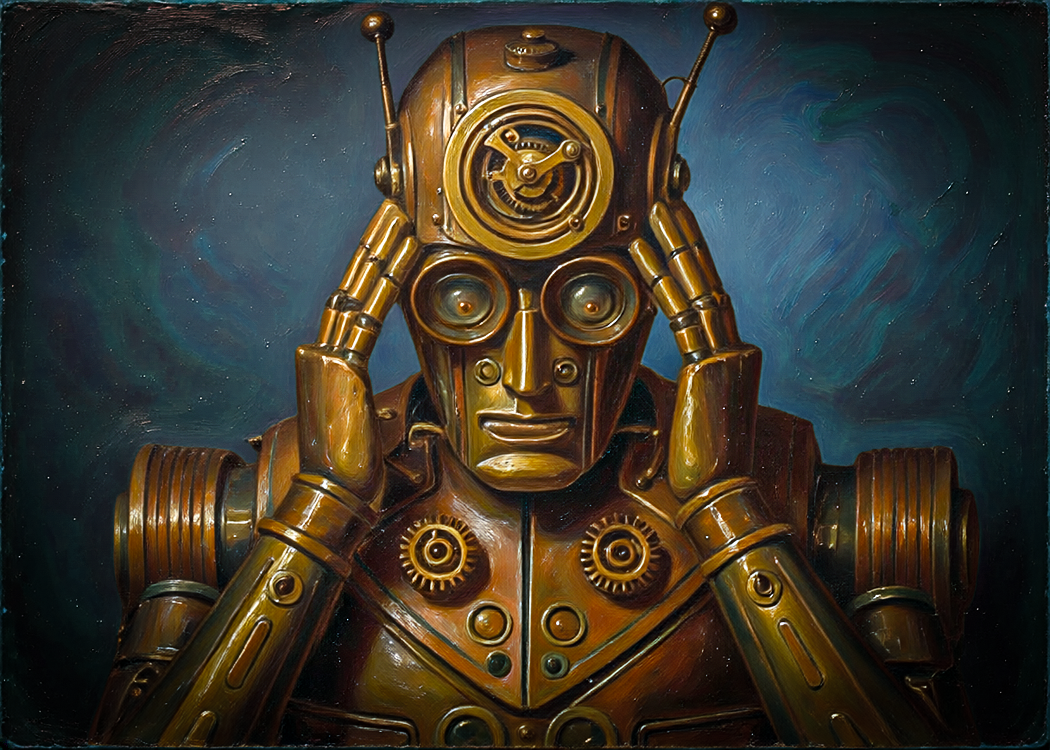
Why does sitting down in front of professional software, an empty timeline, or a blank page feel less like an artistic opportunity and more like staring down a physical threat?
In this episode of Eidos, we hit the pause button on creative guilt to explore a surprising convergence: evolutionary biology, animal sensory perception, and the psychological mechanics of the creative freeze response. Drawing from cognitive neuroscience and the candid production essay “The Anatomy of My Creative Engine: How I Stopped Preparing to Live” by a 57-year-old multidisciplinary filmmaker directing their first feature documentary, we unpack why your brain treats an unfamiliar interface or a blinking cursor with the exact same chemical panic as a prehistoric predator.
We examine the German biological concept of the Umwelt—contrasting the impoverished human sensory “black-and-white tube TV” with the high-definition sensory worlds of UV-guided bees, thermal-hunting pit vipers, and stereo-scenting canines. From there, we dismantle the “hoarder’s trap” of productive procrastination and outline concrete, neurochemically grounded protocols: externalizing the brain into structured dashboards, practicing studio mise en place, rotating projects across an Energy Portfolio, decoupling cortisol from raw media through the “cicada rhythm,” and transforming technical anxiety into an empirical science experiment.
Key Takeaways
- The Biological Reality of Creative Dread: Software avoidance and creative paralysis are not moral failings, laziness, or a lack of discipline. When confronted with unpredictable tools or a blank canvas, your brain steps into a data vacuum. Interpreting this absence of predictable data as a survival hazard, the amygdala initiates a limbic hijack, cutting off power to the prefrontal cortex and locking the nervous system into a freeze response.
- The 4-Step Creative Engine:
- Technical Offloading: Affix a physical sticky note with only three keyboard shortcuts or a four-step sequence directly to your monitor bezel, shielding limited working memory (
chunks) from interface overload.
- The Sandbox File: De-risk intimidating software by importing five throwaway photos (e.g., photos of your office trash can) and deliberately pushing all dials and contrast sliders to
with zero expectations of artistic output.
- The Ugly Tech Test: Impose a five-minute timer and restrict your toolset (e.g., razor blade and selection tool only) to force crude, tangible production data onto the screen.
- The Emotional Cooldown & 24-Hour Render: Apply temporary monochrome grading to evaluate lighting and contrast values without color bias, and enforce a mandatory 24-hour buffer after exporting before evaluating a cut.
- Externalizing the Brain & The “Row 47” Method: Open-ended research expands the data vacuum and triggers chronic alarm. Closed-ended databases (like Google Sheets dashboards dividing pre-production, production, post, and publishing) shrink existential dread into finite actions. Instead of asking “How do I make a movie today?”, the brain’s executive function only needs to execute “Row 47.”
- The Concept of the Umwelt & Internal Data Overload: Coined by Baltic-German biologist Jakob von Uexküll, Umwelt defines the species-specific sensory bubble an organism inhabits. While animals receive dense, immediate physical streams (UV bullseyes, infrared heat maps, 3D stereo olfaction), humans possess limited external physical acuity paired with an overgrown prefrontal cortex. Lacking external data, our brains invent infinite internal scenarios of failure and humiliation.
- Ego Detachment & Ansel Adams’ Score: Amateurs believe rigid outlines kill spontaneity; in reality, structure enables improvisation. Borrowing Ansel Adams’ dictum—“The negative is the score, and the print is the performance”—the detailed production outline is merely sheet music. When reality deviates on set or during an interview, an artist with detached ego pivots like a jazz musician rather than spiraling.
- The Energy Portfolio (Cal Newport’s Rule of Three): To prevent burnout and cognitive fatigue, maintain three active projects calibrated to distinct psychological energies:
- The Blueprint Project: Low-risk, high-curiosity research, outlining, and daydreaming.
- The Grind Project: High-execution, deadline-driven production and heavy lifting.
- The Sandbox Project: Pure, low-stakes play and technical experimentation.
- The Cicada Rhythm & Decompressing Trauma: Editing or evaluating creative work immediately after wrapping production leads to poor artistic choices: the brain evaluates the physical suffering required to capture the media rather than the pixels themselves. By letting raw footage sit untouched (for a full year or via compressed workflows like a 72-hour drawer), stress neurochemicals decouple from the files, restoring cold, clinical objectivity.
- Reframing the “Jack of All Trades”: Navigating shifting paradigms (the analog-to-digital shift, the “Red Queen’s race” of sensor updates) often makes generalists feel fragmented. In complex modern production, a multidisciplinary background is not wasted time; it represents decades of stealth pre-production, equipping the director with a vast creative vocabulary.
Timestamps & Chapter Breakdown
- 00:00:04 – Introduction to Eidos: A modern dinner party exploring photography, culture, and technology; hosted and edited by Ira Gardner.
- 00:00:36 – The Biology of Creative Dread: Software avoidance, interface overwhelm, the data vacuum, and why willpower cannot overcome an amygdala-driven biological freeze response.
- 00:01:49 – The 4-Step Creative Engine (Steps 1 & 2): Physical technical offloading via monitor sticky notes and building zero-stakes sandbox environments with throwaway files.
- 00:03:33 – The 4-Step Creative Engine (Steps 3 & 4): The 5-minute ugly tech test, why action is data collection, temporary monochrome grading, and the mandatory 24-hour render cooldown.
- 00:05:09 – From Artist on Trial to Scientist in the Lab: Reframing mistakes as empirical iterations.
- 00:05:48 – The Deep Dive Begins: The blinking cursor versus the saber-toothed tiger; bridging evolutionary biology, animal perception, and human creative anxiety.
- 00:07:31 – “The Anatomy of My Creative Engine”: Examining the personal essay of a 57-year-old generalist directing their first feature documentary after decades of hiding in pre-production.
- 00:09:25 – The Biology of Procrastination: Why the brain abhors a vacuum; how open-ended research simulates productivity while freezing execution.
- 00:11:18 – Externalizing the Brain: The Dewey Decimal system and card catalog roots; building the 4-phase Google Sheets project dashboard (pre-production, production, post-production, publishing).
- 00:12:45 – The “Row 47” Method vs. The Research Trap: Open-ended gathering versus closed-ended databases; freeing up executive function by reducing the day’s objective to a single spreadsheet line.
- 00:15:54 – Stepping Off the Sheet and Into “The Void”: Lessons from mountaineering and sailing; navigating unpredictable environments where you cannot think your way out of a storm.
- 00:17:21 – Ego Death as a Creative Superpower: Detaching personal self-worth from expert status; giving oneself permission to look foolish and collect real-time data.
- 00:18:25 – Ansel Adams’ Score vs. Performance: Outline as sheet music, production as jazz performance; accepting that reality eats plans for breakfast.
- 00:19:30 – Everyday Ego Detachment: Treating professional feedback (e.g., a critiqued slide deck) as wind adjustments on a sailboat rather than an existential crisis.
- 00:21:21 – The Cicada Rhythm & Weaponized Patience: Shooting a narrative short in 5 days, editing one scene, and putting the hard drive in a drawer for a full calendar year.
- 00:22:05 – Editing Footage vs. Editing Trauma: Why post-producing immediately binds cortisol to clips; waiting out the neurochemical hangover to recover true editorial objectivity.
- 00:23:19 – Feature Documentary Protocols: Shooting in seasonal blocks, letting footage sit untouched from September to January, using AI for objective thematic transcript extraction, and cutting a blind audio-only radio cut.
- 00:24:20 – Trading Adrenaline for Clarity: Resisting modern hustle culture; separating the frantic data acquisition phase from the objective processing phase.
- 00:26:00 – Extending Grace to the Younger Self: Reframing historical creative paralysis not as laziness or weakness, but as an uncalibrated biological defense system.
- 00:28:01 – The Animal Umwelt: Baltic-German biologist Jakob von Uexküll’s theory; human sensory poverty versus nature’s parallel data streams.
- 00:28:25 – Sensory Superpowers in Nature: Houseflies experiencing time 4x faster (the Matrix Neo effect), reindeer breaking arctic wolf camouflage via UV light, and pit vipers seeing infrared heat signatures.
- 00:30:05 – Stereo Olfaction & Temporal Smelling: How dogs use 300 million receptors and directional nostrils to smell a room’s physical history.
- 00:30:46 – The Overgrown Prefrontal Cortex: Transient, present-anchored limbic fear in animals versus the human “emotional time machine” conjuring imaginary horrors.
- 00:31:36 – The Prediction Machine & The Spinning Wheel of Death: Why entering an unknown skill triggers a system freeze when the brain lacks past predictive data.
- 00:33:23 – The Hoarder’s Trap & The Red Queen’s Race: Accumulating gear, leasing studio spaces, and sprinting through rapid camera sensor obsolescence cycles.
- 00:35:28 – Treating Procrastination as Missing Data: Why willpower fails against a limbic hijack; feeding structured data to the prediction machine.
- 00:36:15 – Cognitive Offloading & The Teacher’s Curse: Avoiding one-size-fits-all organizational mandates; matching systems to learning styles:
- Spatial Learners: Physical sticky-note Kanban boards (moving tasks to trigger dopamine).
- Auditory Processors: Voice memo vaults transcribed by AI.
- Boundary Seekers: Tactile project Bibles (physically snapping a 3-ring binder shut to conclude the hunt).
- Analytical Processors: Digital spreadsheet dashboards.
- 00:38:20 – Studio Mise en Place: Banishing unused strobe lighting into barn storage bins to eliminate background cognitive processing load.
- 00:40:22 – The 3-Project Energy Portfolio: Balancing cognitive bandwidth via Cal Newport’s Rule of Three:
- The Blueprint Project (low-risk curiosity).
- The Grind Project (high-intensity execution).
- The Sandbox Project (zero-stakes play).
- 00:42:00 – The Trash Can Protocol: Shooting five photos of an office trash can to break software dials with $0 artistic stakes.
- 00:43:05 – The Pitfall of Doom Scrolling: Why digital escapism worsens cognitive friction; using Blueprint projects to rest the executive brain restoratively.
- 00:44:01 – Action as Empirical Data Collection: The single desk lamp test; generating flawed physical data to replace mental speculation.
- 00:46:14 – Compressing the Cicada Rhythm for Everyday Workflows: The 72-hour digital drawer, peer-swapping raw footage, and the temporary black-and-white tonal check.
- 00:48:30 – Reframing the Generalist: Why having a sampler-plate life is a director’s superpower; validating decades of multidisciplinary experimentation as stealth pre-production.
- 00:49:37 – Closing Reflection: Re-engineering negative emotions into functional superpowers; stepping into the void and feeding the animal.
Tactical Frameworks & Field Protocols
1. The 4-Step Creative Engine
┌─────────────────────────────────────────────────────────────────────────┐
│ THE 4-STEP CREATIVE ENGINE │
├─────────────────┬───────────────────────────────────────────────────────┤
│ 1. Offloading │ Stick 3 critical shortcuts to monitor bezel. │
│ │ Externalize the manual; keep mental RAM clear. │
├─────────────────┼───────────────────────────────────────────────────────┤
│ 2. The Sandbox │ Import 5 throwaway files (office trash can). │
│ │ Crank all dials to 100%. Prove breaking it costs $0. │
├─────────────────┼───────────────────────────────────────────────────────┤
│ 3. Ugly Tech │ Set a 5-minute timer. Restrict to 2 basic tools. │
│ Test │ Generate crude, tangible production data immediately. │
├─────────────────┼───────────────────────────────────────────────────────┤
│ 4. Cooldown & │ Apply temporary monochrome to evaluate raw contrast. │
│ 24-Hr Render │ Export, walk away, and review after a 24-hour buffer. │
└─────────────────┴───────────────────────────────────────────────────────┘
2. The 3-Project Energy Portfolio
| Project Tier | Cognitive Mode | Risk Level | Core Objective |
| The Blueprint | High Curiosity / Low Pressure | Zero Risk | Researching, outlining, ideating, and daydreaming without delivery pressure. |
| The Grind | High Execution / Analytical | High Stakes | Active production, editing, writing to strict deadlines; heavy cognitive lifting. |
| The Sandbox | Playful Experimentation | Zero Stakes | Deliberate tool destruction, button testing, and low-fidelity technical drills. |
3. Compressed Cicada Protocols (Everyday Workflows)
- The 72-Hour Digital Drawer: Force a mandatory 3-day hiatus between rough cut export and secondary revisions.
- Peer Raw Swapping: Exchange unprocessed footage with a creative peer to eliminate attachment to shoot-day trauma.
- The Black-and-White Toggle: Strip chromatic data from the master sequence to inspect pacing and composition devoid of color emotion.
- The 24-Hour Render Rule: Export milestone cuts at end-of-day; strictly forbid self-review until the following morning.
Glossary of Key Concepts
- Umwelt (pl. Umwelten): A biological concept formulated by Jakob von Uexküll denoting the distinct, species-specific sensory bubble that an organism inhabits based on the physical limits of its sensory receptors.
- Limbic Hijack: A term coined by Daniel Goleman describing an immediate, overwhelming neurochemical response from the amygdala that bypasses rational cognitive evaluation in the prefrontal cortex.
- Data Vacuum: An absence of structured, predictable information (such as an unconfigured software workspace or blank timeline) that the predictive brain perceives as an acute environmental hazard.
- Cognitive Offloading: Externalizing information storage from internal biological memory to physical or digital tools (sticky notes, spreadsheets, Kanban boards) to conserve working memory bandwidth (
chunks).
- The “Row 47” Method: A productivity strategy that de-escalates paralyzing, open-ended endeavors into discrete, closed-ended tasks located within a master production spreadsheet.
- Mise en Place (Studio Context): Adapting culinary workflow principles to physical workspaces: banishing extraneous equipment from visual sightlines to eliminate background cognitive processing load.
- The Cicada Rhythm: A post-production protocol enforcing an extended delay (months to a full year) between media capture and editing, allowing acute production cortisol and psychological trauma to decouple from the footage.
- Radio Cut: An initial documentary assembly built strictly on the spoken audio track before adding visual B-roll, preventing editors from being swayed by beautiful imagery that lacks narrative substance.
- The Red Queen’s Race: An evolutionary concept (derived from Lewis Carroll) describing an ecosystem where an entity must run continuously simply to maintain its relative standing; exemplified by rapid camera sensor and software release cycles causing perpetual upgrade anxiety.
- The Teacher’s Curse: The instructional error of imposing one’s personal organizational method onto another learner, inadvertently triggering a freeze response in students with different cognitive styles.
Memorable Quotes
“When we avoid professional software, we usually blame ourselves for lacking discipline. But your brain isn’t actually lazy. It is terrified. Professional tools offer infinite choices, which means they also offer endless ways to make mistakes.”
“You cannot willpower your way out of a biological freeze response. To learn complex tools, you need to build a system that feeds your brain the structured, predictable data it is starving for.”
“Humans are essentially watching the world on an old, snowy black-and-white tube TV, guessing what the plot is. Animals are plugged directly into a 4K VR simulation.”
“The brain is for having ideas, not holding them. If you try to hold your schedules, shot lists, and anxieties inside your head, you use up all your mental RAM.”
“Action is not the result of having all the data. Action is a form of data collection. You cannot think your way out of a creative block. You have to build your way out.”
“If you try to edit your work while still carrying the emotional hangover of creating it, you aren’t editing footage—you are fighting your own memories. You’ll keep a mediocre shot simply because you spent four hours freezing in the rain to get it.”
“Amateurs think deep planning kills spontaneous creativity. In reality, extreme rigor enables extreme freedom. The negative is the score; the live performance is jazz.”
“What is the equivalent of Row 47 for the project you are avoiding right now? Feed the animal, and that blinking cursor stops being a predator and goes back to being an invitation.”
